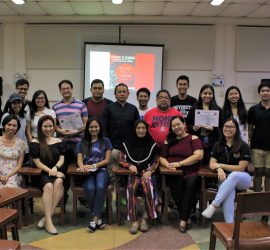
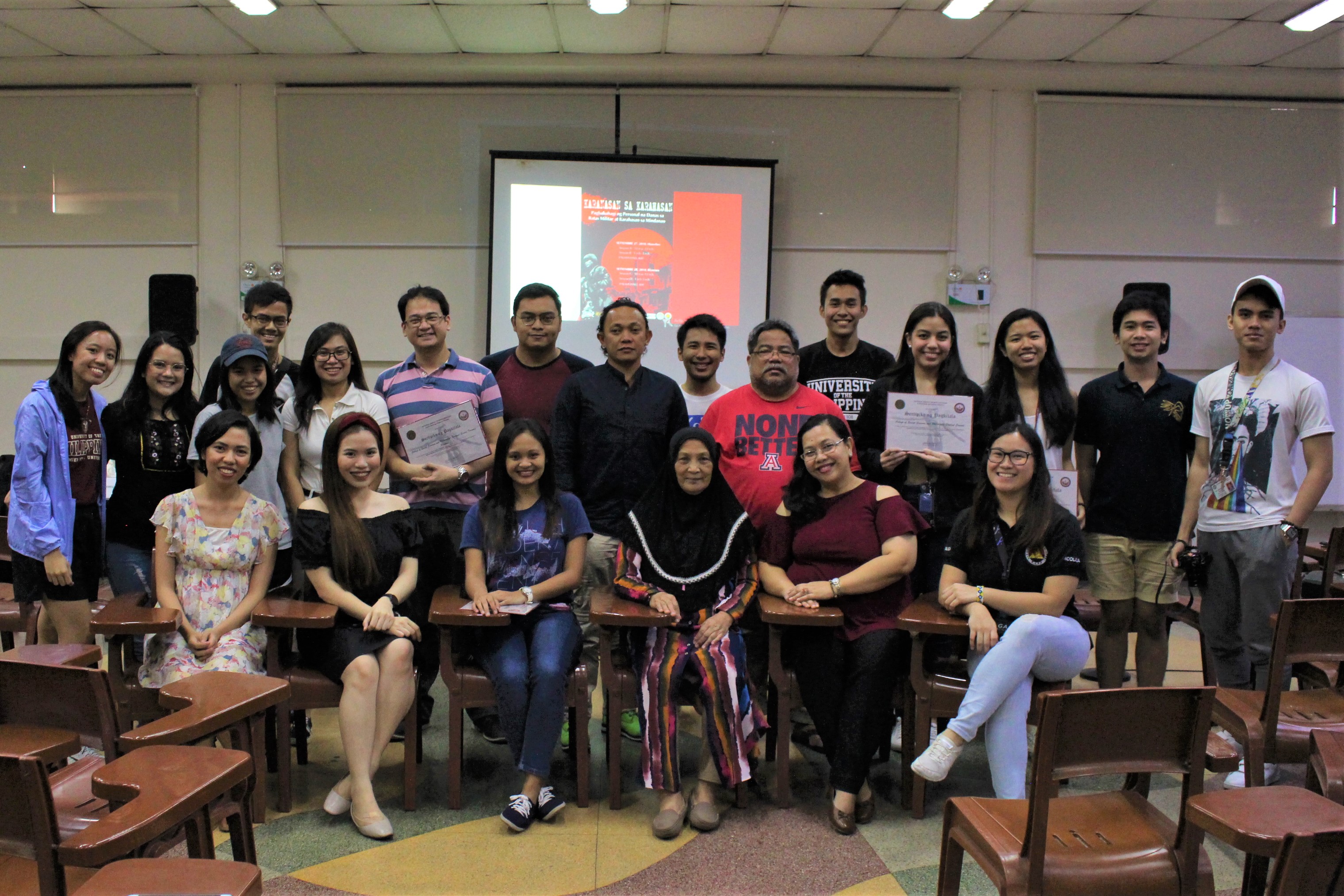
“The greatest cost of the siege is our identity.” This has been emphasized by Prof. Dalumabi Lao Bula, retired professor of Social Science and Humanities in Mindanao State University, over the stretch of the forum entitled “Karanasan sa Karahasan: Pagbabahagi ng mga Personal na Danas sa Batas Militar at Karahasan sa Mindanao.” The said forum was organized by the National Service Training Program (NSTP) Diliman Office, in cooperation with the College of Social Work and Community Development and College of Social Sciences and Philosophy – NSTP. The forum was held on September 27-28,2018 at Palma Hall 400, University of the Philippines Diliman. Prof. Bula further added that their identities as “Maranao,” which means “People of the Lake,” is centered upon the Lake Lanao whose richness of depths provide water, livelihood, transportation and electricity to the inhabitants of its shores. More than the vital role of the Lake in the daily lives of the locals, it greatly shaped the culture and history of Maranaos. Since Marawi’s liberation, Prof. Bula informed the audience that no debris cleaning has been conducted in the ground zero. There are plans to transform the area into a metropolis and build military camps, but these plans failed to include rehabilitation for private citizens whose families and properties have been greatly damaged by the conflict. Currently, she estimated that around 20 percent of the affected families remain in evacuation centers while the remaining 80 percent are either renting a place or residing with relatives. Since the end of the Marawi siege, its residents remain barred from entering the most affected barangays while actors were allowed to shoot some of their movie scenes in the area. According to Prof. Bula, this systematic forced displacement of Maranaos from their homes is a violation of their human rights. As a result, they were not able to practice some of their most honored traditions as Muslims. They were not allowed to look for nor bury their dead. Neither call to prayer nor feasts have been held to celebrate the end of Ramadan in their homes. As an internally displaced person herself, Prof […]
Testing Page
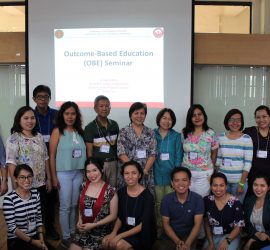
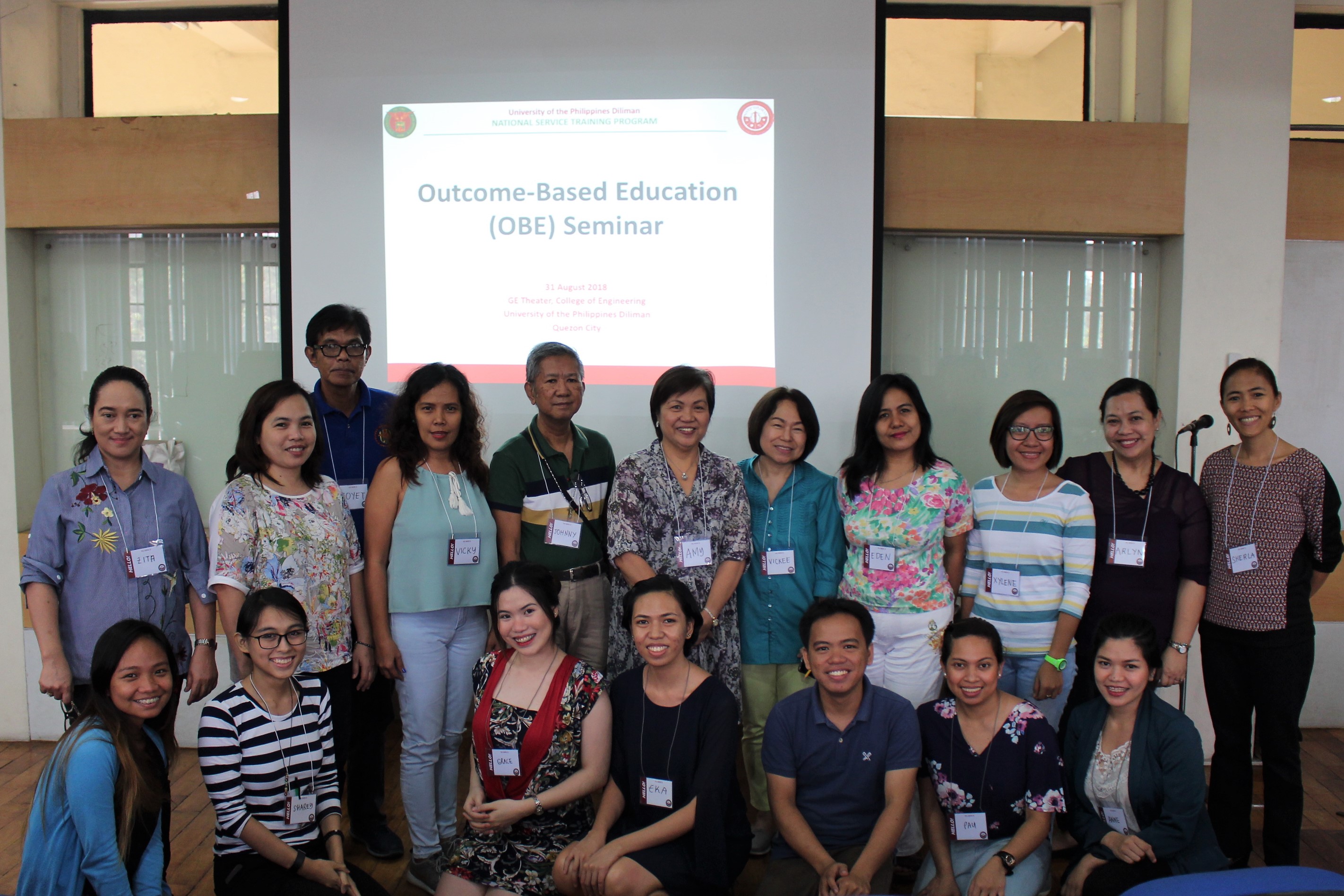
A whole day Outcome-Based Education (OBE) Seminar Workshop was held last 31 August 2018 at the G.E. Theater, College of Engineering, UP Diliman for NSTP instructors from different colleges. NSTP Diliman Director Prof. Arlyn Macapinlac, during her welcome remarks, emphasized the need to continuously improve the existing NSTP Common Module. As the university calls to conform with Outcome-Based Education principles, the NSTP Diliman Office deemed it fit to follow suit. It is directed towards producing an “OBEdized” syllabus. Dr. Amelia Fajardo of the Curriculum Studies Department of the College of Education, UP Diliman, served as the resource person for the seminar-workshop. The following were discussed during the seminar: Differentiation of curriculum from instruction The relationship of curriculum to instruction Three domains of curriculum Bases for the determination of the elements of the curriculum Important features of OBE How to formulate OBE learning objectives Curriculum and instruction were differentiated from each other using the rosary and the puzzle ideology; the rosary as a prescriptive model of curriculum following a specific order of instruction, while the puzzle as a student-based curriculum which reflects that instruction depends upon the player. It was noted that there is no instruction if there is no curriculum, hence, a crafted curriculum is important in order to proceed with standardized instruction. It was also clarified that instruction is not a way of teaching, but a plan which answers to the elements’ learning intent, learning content, teaching strategy, and assessment. From this, Dr. Fajardo shared that curriculum development is defined as a decision-making process on these four elements of the curriculum. Further, factors that influence the curriculum are philosophy of education, socio-cultural context, theories of learning, and the demands of the industry or profession. The afternoon session was continued at the Maynilad Room of the College of Engineering, UP Diliman. Before the workshop proper, Dr. Fajardo lectured on the formulation of OBE objectives and program. The first task of the workshop is to envision the ideal characteristics of the NSTP graduates based on the NSTP program vision, mission, and goals (VMG). Program outcomes, which correspond to the measurable […]
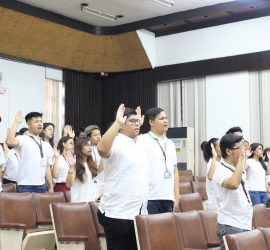
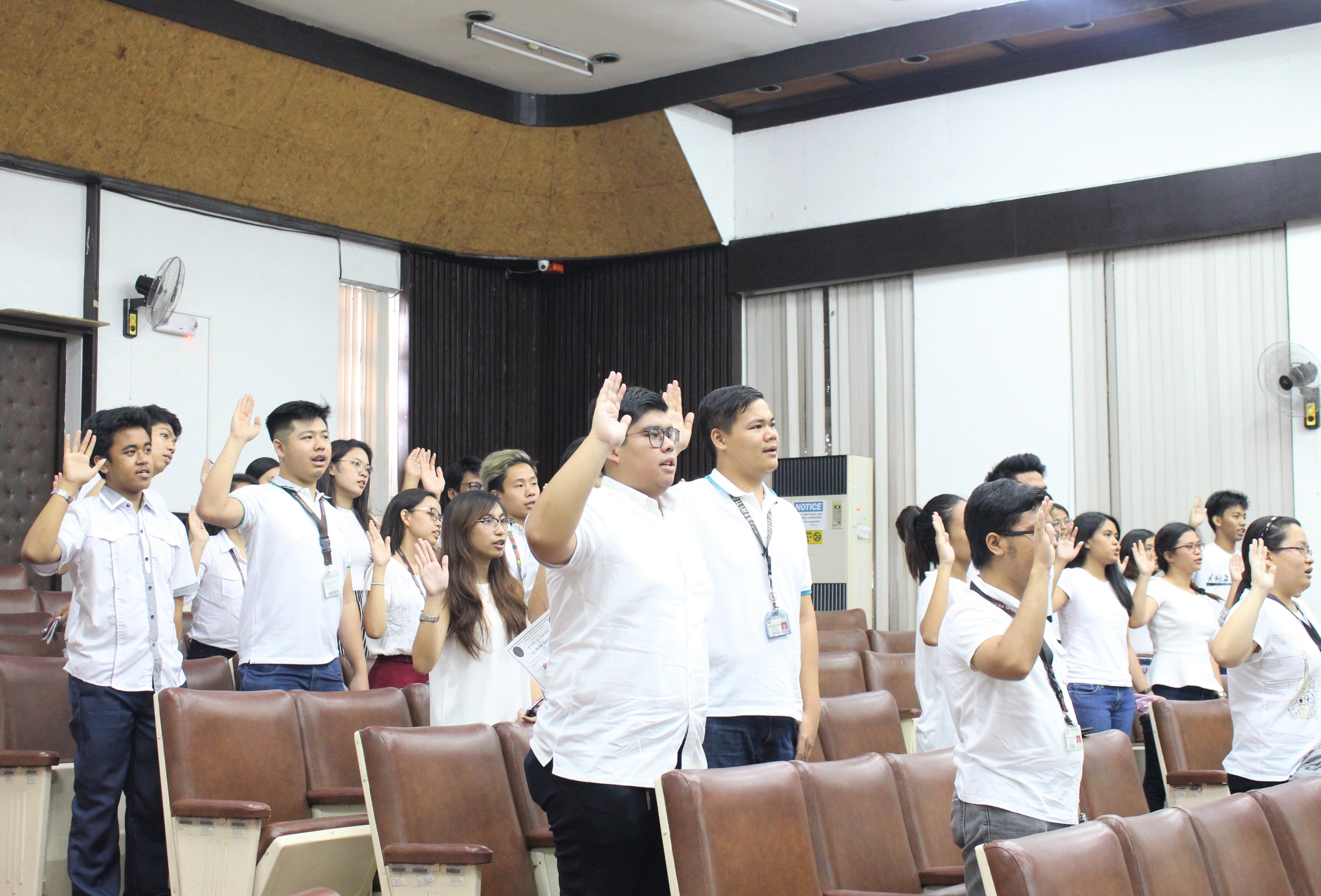
Around 1,161 students of the University of the Philippines Diliman (UPD) who completed the course requirements under the National Service Training Program (NSTP) for the second semester of A.Y. 2017-18 received their certificates of recognition: 1,110 CWTS and LTS graduates were inducted as new members of the National Service Reserve Corps (NSRC) of the Philippines while 51 ROTC graduates were inducted as Reservists under the Department of National Defense. Commencement ceremonies were held by different schools and colleges for the graduates of their NSTP classes. The program includes video presentations featuring community engagement by the NSTP classes. Partner organizations who were vital to the implementation of NSTP class projects were also recognized during the program. For example, one NSTP class from the College of Fine Arts produced a kids’ coloring book for the Reception and Study Center for Children (RSCC) under DSWD. LTS classes from the College of Social Sciences and Philosophy and College of Education partnered with San Vicente Elementary School for literacy projects. On May 17, 2018, the College of Engineering held its commencement ceremony for the 241 graduates of its NSTP program at the Industrial Engineering Auditorium. The program started at 9 am and ended at 12 noon. NSTP College Coordinator Raymond Freth Lagria gave the opening remarks while College of Engineering Dean Dr. Rizalinda De Leon attended the ceremony and gave an inspirational speech to the new NSTP graduates. NSTP Diliman Director Arlyn P. Macapinlac assisted in the awarding of certificates and delivered the closing remarks. Around 148 students participated in the College of Science’s NSTP graduation ceremony at the Institute of Biology Auditorium. Held from 1 pm to 4 pm, the ceremony was organized by NSTP College Coordinator Jordan Ferdin Halili. In his keynote speech, Professor Gani Tapang of Agham (Samahan ng Nagtataguyod ng Agham at Teknolohiya Para sa Sambayanan) encouraged NSTP graduates to use science in serving the people. Last May 17, 2018, the College of Social Science and Philosophy (CSSP), with the help of NSTP College Coordinator Leander Marquez, conducted a graduation ceremony for its new NSTP graduates at the Palma Hall lobby. […]
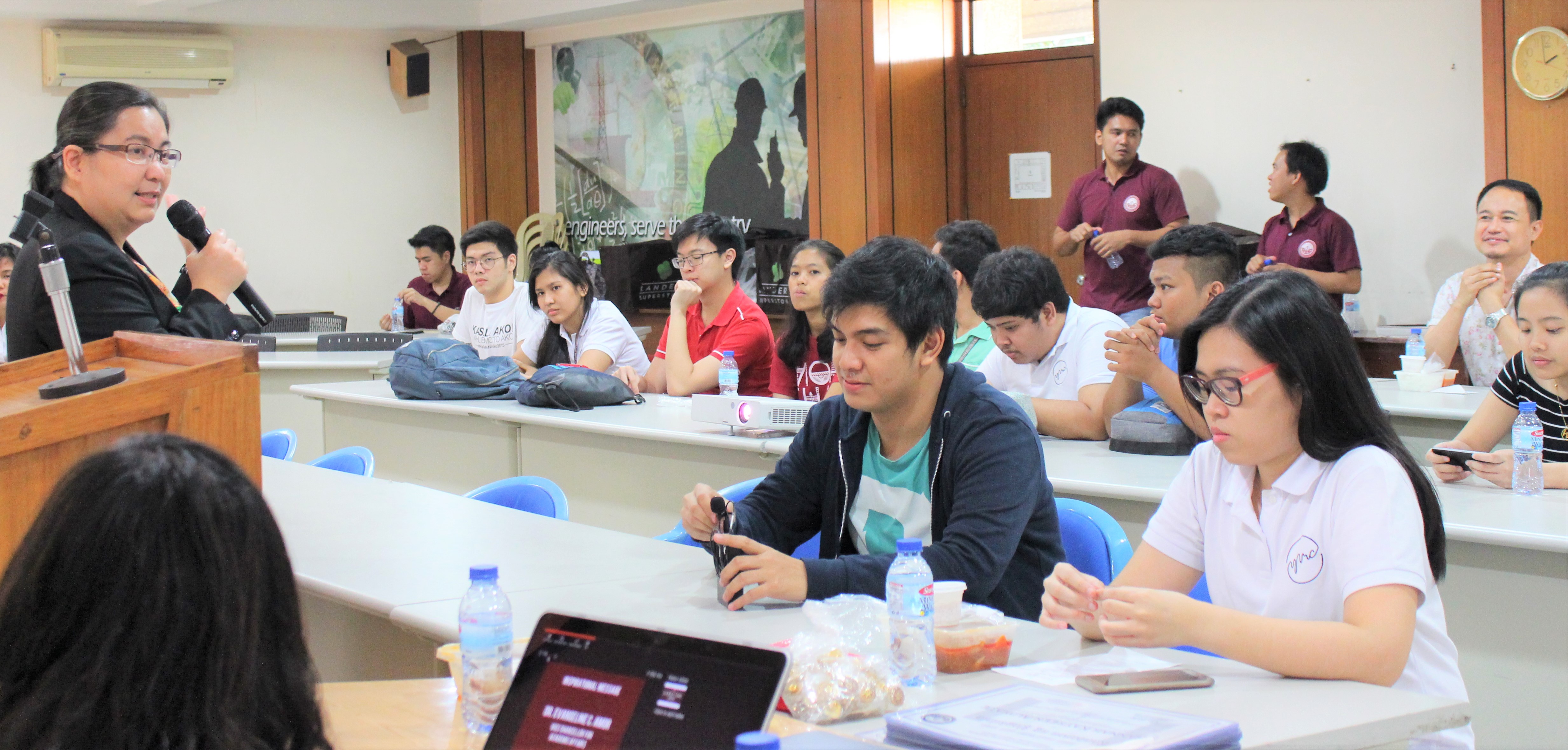
On February 19, 2018, the NSTP Diliman Office launched the Gawad NSRC to express appreciation to the members of NSRC, who have been actively participating as volunteers to NSTP and NSRC activities and programs. Student organizations from the College of Mass Communication, Radio Circle and Broadcasters’ Guild, were also recognized during the event for being our partner organizations in our activities and programs such as the NSTP Radio Program at DZUP 1602 “Serbisyong Tatak UP”, Serbisyong Tatak UP para sa Marawi Initiatives and NSTP Graduations. The event was held at Seminar Room A, NEC Building from 2:00 p.m. to 4:00 p.m. It served as a celebration for their valuable contribution to the success of NSTP Diliman’s activities and programs. by Vianne Grace C. Delfinado